
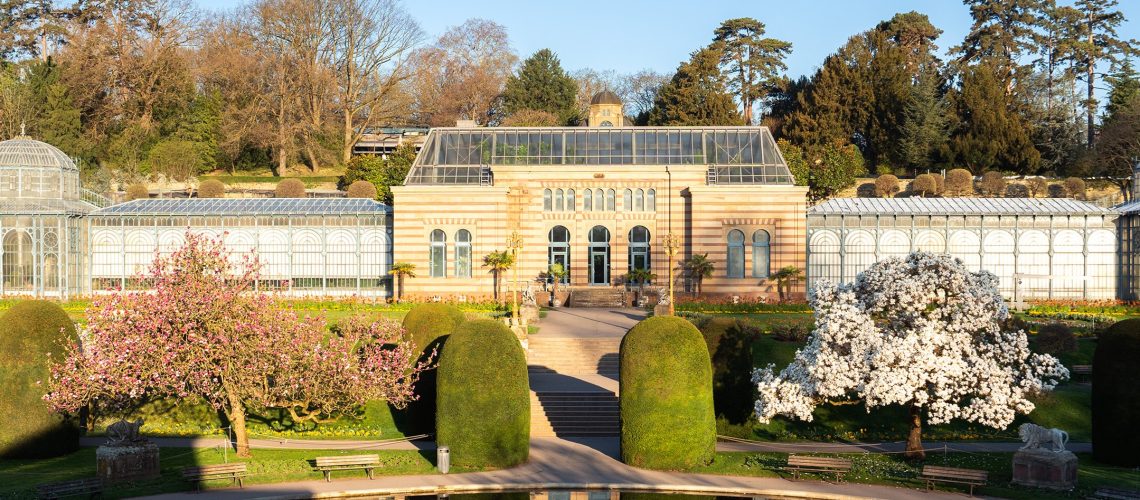
Over the past few months, Arqum has supported Wilhelma Stuttgart – the only zoological-botanical garden in Germany and one of the most species-rich zoos in the world – in calculating an organizational greenhouse gas balance (CCF ). The aim was to develop a sound inventory of the most relevant emission sources, in accordance with the international standard of the Greenhouse Gas Protocol (GHG Protocol), as a starting point for Wilhelma's operational climate management. Accordingly, all of Wilhelma's direct emissions (Scope 1 and 2, including electricity and heat) were fully accounted for.
Applying the GHG Protocol, Arqum conducted a materiality analysis for upstream and downstream indirect emission sources (Scope 3) at the start of its collaboration with Wilhelma Zoo. The analysis revealed that, among other things, purchased goods (e.g., animal feed, substrates, and plants), the associated transportation, employee commutes, and visitor arrivals and departures were relevant indirect emission sources. These and four other Scope 3 emission sources, along with Scope 1 and 2 emissions, were included in the comprehensive system boundary.
In the following stages, Arqum supported the Wilhelma management team – as far as possible – in the intensive data collection, discussing and clarifying any questions that arose. In addition to electricity, heating, and vehicle fleet consumption, the annual feed quantities of various species were also recorded. Furthermore, the quantities of plants used for seasonal replanting of the flowerbeds were taken into account, individual transport routes of the predominantly regional suppliers were traced, and the mileage was quantified. Arqum's most extensive task was subsequently to research suitable emission factors for various flower species, flamingo feed, oats, and other feedstuffs.
Through regular coordination, short communication channels and great commitment on the part of the Wilhelma management, the result is a solid GHG balance sheet, which shows that visitors contribute very significantly to the Wilhelma's emissions through their choice of means of transport for arrival and departure.
In addition to visitor arrival and departure, heating and procurement were identified as key areas for action in the now-targeted decarbonization efforts. Further emission sources, over which Wilhelma and its employees can directly influence, are also to be improved through targeted measures in the long term. To this end, Wilhelma is now taking the next step: Arqum is currently supporting Wilhelma in developing a decarbonization pathway with active and passive decarbonization levers.

Your contact person at Arqum: Linda Böhringer