
Over the past few months, we supported ARNO Design in calculating the ecological footprint (PCF) of two exhibition stands – a pre-built stand designed with an explicit focus on sustainability and a classic, highly customized stand. The goal was to directly compare the CO2 emissions of both stands. The result is impressive: Thanks to a sharing approach and a focus on sustainable materials, the pre-built stand generates more than 60% fewer climate-damaging emissions. The calculations were confirmed by GUTcert as part of a thorough audit.
Read our interview with Leonie Haberlander, Business Development and Sustainability Strategy Manager at ARNO Design, about her experiences, the challenges she faced in calculating PCF, and why it was worthwhile to consider the entire life cycle of the exhibition stands:
What was your motivation for the project?
At ARNO Design, we have been committed to sustainability for over 30 years. With the emergence of new certification options and the increasing demand for verifiable sustainability, it was clear to us that we wanted to take the next step. Following our successful collaboration with Arqum within the framework of ÖKOPROFIT, we decided to pursue PCF certification. We hadn't yet found a precedent for this in the trade fair industry – which only motivated us more to take on the challenge.
How did you proceed and how did Arqum support you?
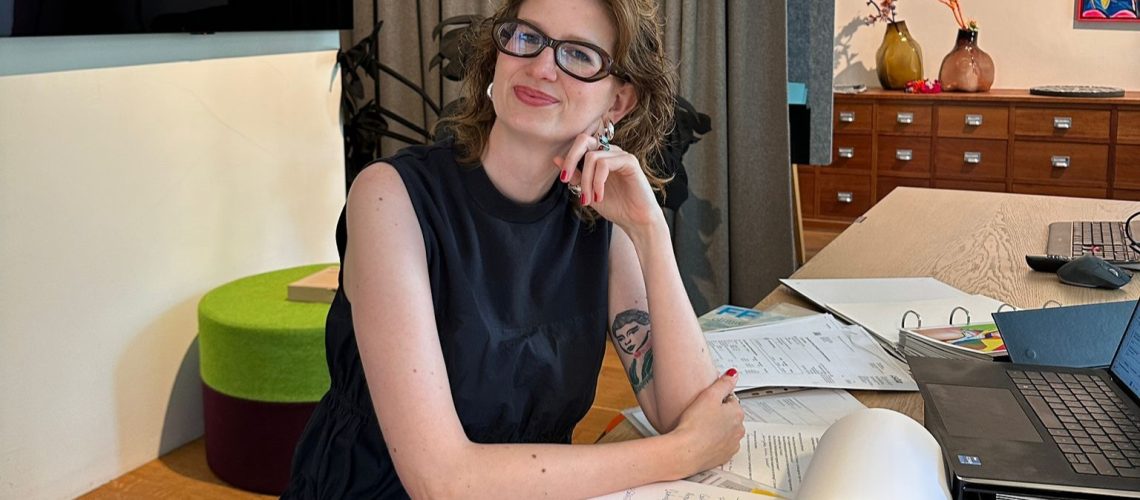
Together with our managing director, Mirka Nassiri, I took over the internal coordination. Arqum, as a consulting firm, was a great help to us by explaining the specific requirements of ISO 14067 and clearly structuring the necessary steps. This allowed me to concentrate on collecting and organizing data from our projects and processes, while Arqum ensured that we never lost sight of the certification process.
What were the biggest challenges?
The biggest challenge was the complexity of our exhibition stands. From screws and fabrics to ceiling lighting, every single component had to be considered. Added to this were logistical issues such as the transport capacity of our trucks – topics that require extensive knowledge and decades of trade fair experience. Fortunately, I was able to rely on the expertise of our experienced team, who patiently answered all my questions, even after the 20th phone call.
Since it was our first ISO certification, there was also a lot to learn. At the beginning of the journey, I couldn't have estimated the scope of the work involved. I'm all the more pleased that we were able to successfully complete the entire process. This experience with Arqum has not only given me a wealth of knowledge but also boosted my confidence for future certifications.
What results did the PCF calculations yield?
The confirmation that our sustainable practices are also reflected in the numbers was particularly valuable. Seeing that was very motivating! At the same time, we gained many exciting insights into the individual components of our exhibition stands – for example, where further CO₂ savings can be achieved through material selection, design decisions, or logistics. These learnings help us to make targeted adjustments in the right areas.
What are the next steps regarding sustainability?
Following our successful certification, we are currently focusing on researching new, innovative, and sustainable materials and integrating them into our design processes. We also want to further optimize our material cycle and explore ways to better reuse discarded components.
Your contact person at Arqum: Nuria Remmer